

Why Management Networks Must Remain Isolated

Adam Cady

Why Management Networks Must Remain Isolated
The security and resilience case for separating infrastructure control from production traffic.
Network convergence has delivered enormous operational benefits: fewer platforms, simplified infrastructure, reduced complexity, and easier management.
But there is one place where convergence can introduce significant risk:
The management plane.
When the same network carrying production traffic is also responsible for reaching, configuring, troubleshooting, and recovering critical infrastructure, two systems that should protect one another begin sharing the same failure domain.
If the production network fails, the management path can fail with it.
If the production network is compromised, privileged administrative access may be exposed to the same attack environment.
For mission-critical networks, that is more than an inconvenience.
It is an architectural security risk.
The Problem With a Converged Management Plane
Most network infrastructure is managed in-band.
Administrators reach routers, switches, firewalls, servers, and other devices using SSH, APIs, centralized management platforms, SNMP, and other tools operating across the same LAN or WAN infrastructure carrying normal production traffic.
Under normal conditions, this is efficient.
The problem is what happens when normal conditions disappear.
A routing failure, firewall misconfiguration, fiber cut, power event, cyberattack, or other disruption can make critical infrastructure unreachable through the same network administrators depend on to manage it.
The result is a dangerous dependency:
The system responsible for recovery depends on the system that needs to be recovered.
That creates both an availability problem and a security problem.
Shared Infrastructure Means Shared Risk
A converged management architecture does more than create a common point of failure.
It can also extend the production network's attack surface into the administrative environment.
Management sessions contain some of the most sensitive activity occurring across infrastructure:
Privileged administrator credentials
Device configurations
Security policies
Administrative commands
Routing and network information
Access to critical infrastructure controls
When that traffic shares infrastructure with production systems, a compromise of the production environment may provide an attacker with additional opportunities to reach systems responsible for controlling it.
Segmentation, firewalls, access-control lists, and zero-trust policies can substantially reduce that exposure.
But they do not eliminate the underlying architectural dependency.
A segmented management network can still depend on the same infrastructure. An independent management path does not have to.
Why Isolation Changes the Security Posture
Secure Out-of-Band Management creates a separate path to critical infrastructure that remains available independently of the production network.
Instead of reaching a router through the network it is responsible for routing, an OOB console server can connect directly to the device's serial or console interface and provide an alternate administrative path.
That distinction matters.
When properly designed, an isolated OOB architecture can separate the management environment from several production-network dependencies:
Connectivity.
Administrators retain an alternate path when the primary WAN or LAN is unavailable.
Device access.
Direct console connectivity allows operators to reach equipment even when its IP networking or configuration has failed.
Authentication.
Local or independently available authentication options can preserve authorized access when centralized identity infrastructure is unreachable.
Transport security.
Encryption and strong authentication protect privileged administrative communications independently of production-network controls.
Recovery.
Integrated power-control capabilities can allow administrators to remotely restart equipment when console access alone cannot restore service.
The goal is not simply to create another route into the network.
The goal is to create a management architecture that does not inherit the same failure conditions it was designed to overcome.
What True Management Isolation Requires
Not every solution described as “Out-of-Band” provides the same degree of independence.
A resilient OOB architecture should be evaluated across several dimensions.
1. An Independent Device-Level Access Path
The management connection should reach critical infrastructure directly rather than depending entirely on the device's production-facing IP connectivity.
Direct serial console access provides administrators with a recovery path when routing tables, interfaces, operating configurations, or other network functions have failed.
2. Authentication That Survives a Network Failure
An alternate connection provides limited resilience if administrators must still reach an Active Directory, RADIUS, TACACS+, or other centralized identity service located behind the unavailable production network.
A resilient design should provide secure authentication options that remain usable when those dependencies cannot be reached.
3. Protected Administrative Transport
Isolation cannot come at the expense of security.
The OOB path itself must be protected with strong encryption, authentication, access controls, and appropriate logging.
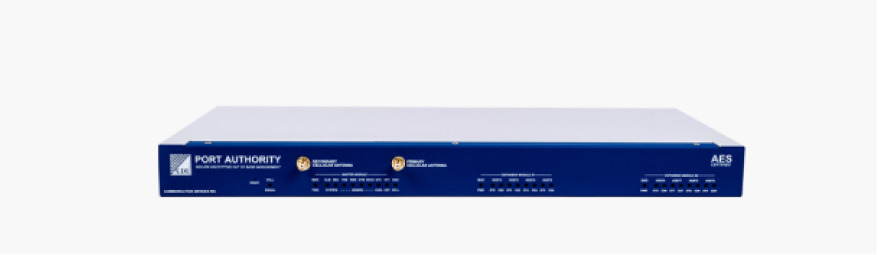
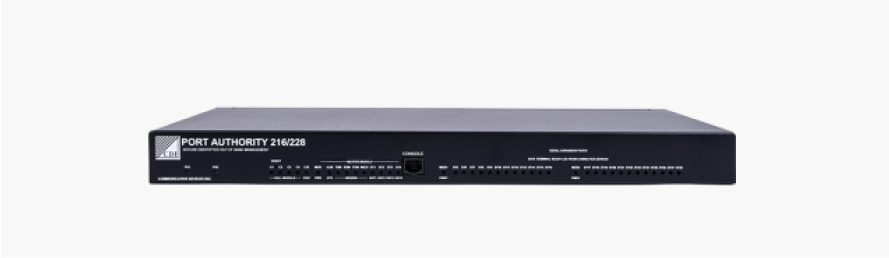
CDI's Port Authority family supports encrypted OOB management, built-in two-factor authentication, and direct console connectivity. CDI also documents authentication options designed to remain available during loss of primary network connectivity.
4. Connectivity Independent of the Local Production Network
Remote offices, unmanned facilities, network huts, substations, transportation sites, and other distributed locations are often precisely where independent access matters most.
Cellular connectivity can establish an alternate management path without depending on the site's primary WAN connection.
CDI's architecture supports embedded cellular connectivity using private APN options, which the company states can keep management traffic from traversing the public internet.
5. Centralized Control Without Recreating the Dependency
Large operators still need centralized visibility and administration across hundreds or thousands of locations.
The challenge is gaining that operational scale without reconnecting every management endpoint to the same production infrastructure the OOB architecture was intended to bypass.
CDI's Out-of-Band Manager is designed to provide centralized visibility and policy management while remote sites retain independent access capabilities.
Where CDI's Architecture Is Different
CDI has been developing data-communications and Out-of-Band Management technology since 1976, giving the company decades of experience designing specifically around secure infrastructure access and recovery.
Its Port Authority architecture combines direct console connectivity with secure transport, independent authentication capabilities, cellular connectivity, centralized management, and remote power-control options.
That combination addresses an important distinction:
Out-of-Band Management should not simply be another feature running on the production network. It should remain operational when the production network is unavailable.
For government and regulated environments, cryptographic validation adds another layer of assurance.
As of August 2026, NIST lists CDI's Port Authority Series as an active FIPS 140-3 validated hardware module under Certificate #5465, validated August 5, 2026. CDI also states that its solutions are TAA compliant and designed, engineered, and manufactured in the United States.
Isolation Is About More Than Outages
The argument for an independent management plane is often framed around disaster recovery.
But the security implications are equally important.
When production access and administrative control are separated, an organization reduces the chance that one failure—or one compromise—can simultaneously affect both the infrastructure and the mechanisms required to recover it.
That strengthens:
Operational resilience
Administrative security
Recovery readiness
Remote-site availability
Network control
Compliance posture
Incident-response capabilities
For carrier, federal, defense, enterprise, transportation, energy, and other mission-critical environments, this is an architectural decision rather than simply a product decision.
The Question Network Architects Should Be Asking
The question is no longer simply:
“Do we have Out-of-Band Management?”
The better question is:
“How independent is our management plane from the infrastructure it is supposed to recover?”
Because when an outage or attack takes the production network offline, the management environment should not disappear with it.
CDI has spent decades building secure Out-of-Band Management around that principle—providing independent console access, protected communications, authentication, cellular connectivity, centralized management, and infrastructure recovery capabilities for networks where maintaining control matters most.
Separate the management plane. Preserve operational control.
Contact CDI to discuss how an isolated Out-of-Band Management architecture can strengthen the security and resilience of your network.
Related Tags
Share this article
Related Content


United States Office
- 85 Fulton Street Boonton, NJ 07005
- +1 973-334-1980
- +1 973-334-0545
- info@commdevices.com
© 2023 Communication Devices, Inc.