


Communications Infrastructure as National Security

Adam Cady

Communications Infrastructure as National Security
Why network control systems are strategic assets — and what it takes to protect them.
There is a category of technology that does not make headlines, does not get featured at consumer trade shows, and does not appear on most executive briefing agendas — and yet its integrity is foundational to national security. Out-of-Band (OOB) network management infrastructure sits quietly behind federal agency operations, defense contractors, intelligence community networks, and the civilian systems that support them. When it works, no one notices. When it fails — or worse, when it is compromised — the consequences can cascade across systems that the country depends on.
This is not a theoretical concern. Nation-state adversaries have demonstrated sustained, sophisticated interest in the management planes of U.S. network infrastructure. The ability to reach a router, firewall, or communications system through its console port — bypassing the primary network entirely — is exactly the kind of persistent access a threat actor seeks to establish. Securing that same capability for legitimate administrators is exactly what OOB management is designed to provide. The distinction between a secure OOB solution and an insecure one is, in that context, a national security question.
FISMA, Impact Levels, and Why FIPS 140-3 Is the Baseline
The Federal Information Security Modernization Act (FISMA) requires federal agencies to implement security controls commensurate with the risk and impact level of their information systems. Under the NIST SP 800-53 framework, systems are categorized as Low, Moderate, or High impact — and the cryptographic requirements scale accordingly. For Moderate and High impact systems, which encompass the vast majority of mission-critical federal infrastructure, FIPS 140-validated cryptography is not optional. It is a mandatory control.
FIPS 140-3 is the current and forward-looking standard. NIST has confirmed that all FIPS 140-2 certificates will move to the historical list in September 2026, after which only FIPS 140-3 validated modules will satisfy new federal procurement requirements. For agencies and contractors managing infrastructure refreshes, that deadline is not distant — procurement cycles, integration timelines, and ATO processes mean planning needs to begin now.
The distinction that matters most in this context is between validated and compliant. A solution that claims FIPS compliance based on a third-party module — where the vendor has not independently certified their own implementation — does not carry the same assurance as one with first-party FIPS 140-3 validation. For FISMA Moderate and High environments, that difference can determine whether a system achieves Authority to Operate.
TAA Compliance: Supply Chain Integrity Is a Security Control
The Trade Agreements Act (TAA) requires that products procured under federal contracts be manufactured or substantially transformed in the United States or a designated country. For IT infrastructure, this is not merely a procurement checkbox — it is a supply chain security control. Hardware sourced from non-TAA-compliant manufacturers introduces risk at the firmware, component, and assembly level that no software control can fully mitigate.
For OOB management specifically — devices that provide direct console access to an agency’s most critical network equipment — supply chain integrity is not an abstract concern. A compromised OOB device is a persistent backdoor into infrastructure that is designed to remain accessible even when primary systems are down. TAA compliance and domestic manufacturing are not bureaucratic requirements in this context. They are risk management.
OOB Management as a National Resilience Asset
Federal agencies, defense contractors, and the critical infrastructure sectors they depend on sharea common operational requirement: the ability to maintain control of their network infrastructure under adverse conditions. Ransomware, denial-of-service attacks, physical disruptions, and insider threats all have one thing in common — they can sever primary network access. A properly deployed OOB architecture ensures that engineers retain a validated, encrypted, authenticated path to every critical device, independent of whatever is happening on the primary network. That capability, at scale, is what national resilience looks like at the infrastructure layer.
CDI: The Only OOB Provider with First-Party FIPS 140-3 Validation
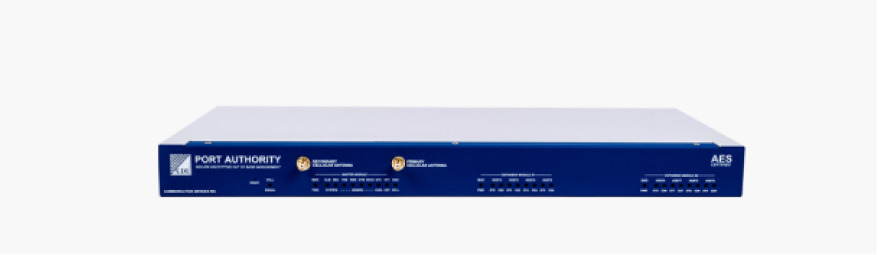
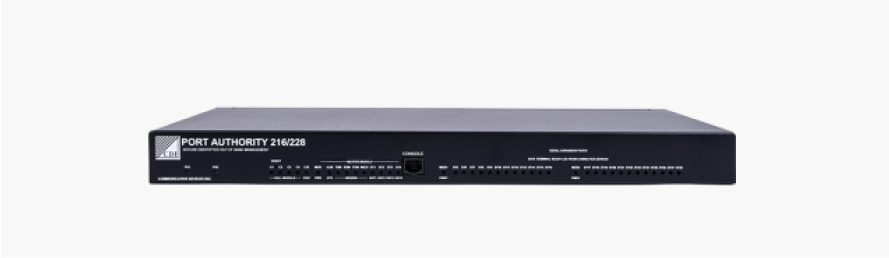
Communication Devices, Inc. (CDI) is the only Out-of-Band management provider with first-party FIPS 140-3 validation — not self-attested compliance, not a borrowed third-party module certification. Validated. Our Port Authority console server family delivers AES-256 encrypted OOB management with built-in two-factor authentication and an embedded SIM operating on a private APN, ensuring that management traffic never traverses the public internet.
CDI products are Built in the USA and fully TAA compliant — meeting the supply chain requirements of federal procurement without exception. Combined with direct serial console access that operates independently of Active Directory, RADIUS, or TACACS+, CDI delivers an OOB architecture that performs precisely when the systems it supports cannot.
For agencies and contractors operating FISMA Moderate or High impact systems, CDI is the validated, compliant, domestically manufactured choice. For program managers navigating the FIPS 140-3 transition before the September 2026 deadline, CDI is ready now.
Network control systems are strategic assets. The technology used to manage them should be held to the same standard. Contact CDI to learn how FIPS 140-3 Validated Out-of-Band Management supports your agency’s FISMA posture, ATO requirements, and national security mission.
Related Tags
Share this article
Related Content


United States Office
- 85 Fulton Street Boonton, NJ 07005
- +1 973-334-1980
- +1 973-334-0545
- info@commdevices.com
© 2023 Communication Devices, Inc.