


Infrastructure Architecture Patterns for Secure, Resilient Operations

Adam Cady

Designing networks for recovery—not just availability.
For a Tier 1 network operator, an outage is rarely isolated.
A fiber cut, routing error, failed device, power event, or compromised management interface can quickly affect carrier interconnects, downstream networks, and the enterprise and government customers that depend on the infrastructure staying available.
Yet the networks that recover fastest are not necessarily the ones with the most redundant production paths.
They are the ones designed around a critical architectural principle:
The ability to securely reach, control, and recover network infrastructure even when the primary network itself is unavailable.
That principle sits at the heart of resilient network operations across telecommunications, defense, critical infrastructure, energy, transportation, and other mission-critical environments.
And increasingly, it needs to be treated as an architectural requirement—not simply an emergency-access feature.
The Single-Path Problem
Most network management begins with in-band access.
Engineers connect to routers, switches, firewalls, and other infrastructure using SSH, management platforms, APIs, SNMP, or other tools that ultimately depend on the production WAN or LAN.
Under normal operating conditions, this approach is efficient.
The problem appears when the network being used to manage the infrastructure becomes the source of the failure.
If routing is broken, connectivity is lost, a firewall is misconfigured, or a critical management dependency becomes unavailable, administrators may also lose the very path they need to diagnose and correct the problem.
The network fails—and the management path fails with it.
For operators responsible for large, geographically distributed networks, that dependency can have significant operational consequences.
A configuration issue that could potentially be resolved remotely in minutes may instead require escalation, local intervention, or a technician dispatch. Across remote offices, carrier facilities, network huts, cabinets, substations, transportation sites, and other unmanned locations, the impact can multiply quickly.
Redundancy protects traffic.
Operational resilience also requires independent control.
Out-of-Band Management as an Architectural Layer
Secure Out-of-Band Management addresses this vulnerability by establishing an independent path to critical network infrastructure.
Rather than depending exclusively on the production network, an OOB architecture can provide direct access to the console or serial management interface of routers, switches, firewalls, servers, and other devices through an alternate communications path.
Depending on the environment, that path might use:
- Private cellular connectivity
- A dedicated management network
- An independent WAN connection
- Direct serial console access
- Secure remote power-control infrastructure
The objective is straightforward:
When the production network becomes unavailable, the management network remains accessible.
This is why OOB management appears in both carrier and defense architectures.
The terminology and operational requirements may differ, but the underlying objective is the same: preserve command, control, visibility, and recovery capabilities when normal communications have been degraded or lost.
For a carrier, that means accelerating service restoration and protecting SLA performance.
For defense and government environments, it means maintaining secure administrative control under adverse conditions.
For critical infrastructure, it means keeping operators connected to systems that cannot simply wait for primary connectivity to return.
Four Principles of Resilient OOB Architecture
Simply adding another connection does not automatically create a resilient management architecture.
Several design decisions determine whether the OOB layer will remain usable—and secure—during an actual event.
1. Reduce Dependency on the Failed Environment
An alternate communications path provides limited value if accessing it still depends entirely on infrastructure reachable only through the failed production network.
Identity services, centralized management systems, routing dependencies, DNS, or other services can unintentionally recreate the same failure domain.
A resilient architecture should provide a secure method for authorized administrators to retain access even when normal network dependencies are unavailable.
The goal is not to bypass authentication.
The goal is to ensure authentication itself does not become a single point of operational failure.
2. Secure the Management Path
An OOB connection provides privileged access to some of the most sensitive devices in the network.
That makes it an important security boundary.
Strong encryption, authenticated sessions, multi-factor authentication, access controls, logging, and appropriate cryptographic validation should be designed into the management plane rather than added later.
For federal and other regulated environments, this becomes especially important as organizations transition toward FIPS 140-3-validated cryptographic modules and solutions.
An emergency management path should never become an easier path for an attacker.
3. Make Connectivity Independent of Local Infrastructure
Remote and unmanned sites often have the fewest recovery options available when something fails.
An OOB architecture using embedded cellular connectivity and private network options can establish a management path without relying on the local production LAN or WAN connection.
That separation becomes especially valuable at locations where a circuit failure, configuration error, or local infrastructure issue could otherwise isolate the entire site.
The more remote the location, the more important an independent recovery path becomes.
4. Extend Recovery Beyond Console Access
Not every outage can be resolved through configuration changes.
Sometimes a device simply needs to be restarted.
Integrating remote power management into the OOB architecture allows authorized operations teams to power-cycle or recover equipment without dispatching personnel solely to perform a physical reset.
Across hundreds or thousands of distributed locations, eliminating even a portion of those truck rolls can materially improve recovery times and operating efficiency.
Why OOB Belongs in the Architecture—not the Incident Response Plan
There is an important difference between having an emergency-access solution and designing for operational recovery.
Organizations that treat OOB management as something to deploy after reliability problems emerge are addressing the symptom.
Organizations that design an independent management plane from the beginning are addressing the architecture.
That distinction matters during a serious outage.
When the primary network is unavailable, the organization should already know:
Can we still reach the affected infrastructure?
Can we securely authenticate administrators?
Can we access the device console without relying on the failed network?
Can we remotely restart equipment if necessary?
Can we maintain visibility and control across geographically distributed sites?
Those questions should be answered during network design—not during the outage.
Security and Compliance Add Another Dimension
For organizations supporting U.S. federal networks, architecture decisions also carry a cryptographic compliance requirement.
FIPS 140-2 validations remain on the NIST Active Validation Lists through September 21, 2026. Beginning September 22, 2026, only FIPS 140-3 module validations will remain active.
That makes the transition particularly relevant when organizations are evaluating new management infrastructure, refreshing existing systems, or planning future federal deployments.
OOB management may be designed primarily for operational resilience, but the security of that management plane must receive the same scrutiny as the infrastructure it controls.
Designing for the Moment the Network Fails
The real value of resilient architecture is not measured when everything is working.
It is measured when something isn't.
A secure, independent management plane gives network operations teams another path to diagnose failures, restore devices, recover configurations, and maintain administrative control when normal connectivity has been compromised.
For organizations operating mission-critical infrastructure, that capability should not be considered optional emergency equipment.
It should be part of the network architecture itself.
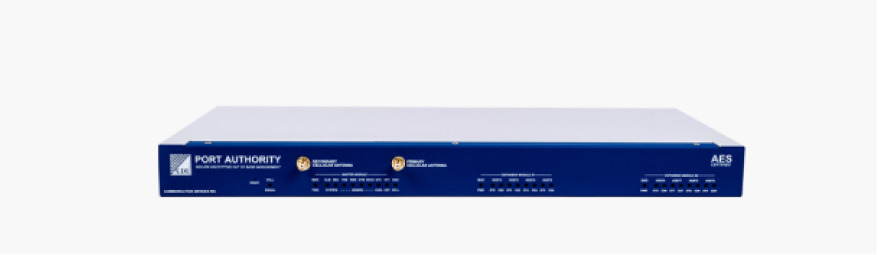
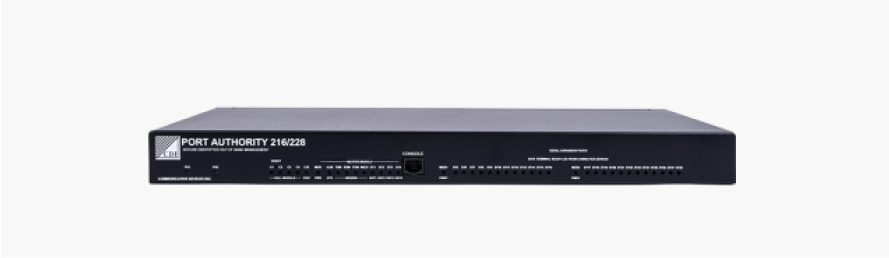
Communication Devices, Inc. has spent decades developing secure Out-of-Band Management solutions for telecom, federal, defense, energy, transportation, and other mission-critical environments. CDI's PA100 Government Series is FIPS 140-3 validated, with solutions designed to provide secure console access, independent connectivity, centralized management, and remote infrastructure control.
How resilient is your management plane when the primary network is the thing that fails?
Contact CDI to discuss secure Out-of-Band Management architecture for your network operations environment.
Related Tags
Share this article
Related Content


United States Office
- 85 Fulton Street Boonton, NJ 07005
- +1 973-334-1980
- +1 973-334-0545
- info@commdevices.com
© 2023 Communication Devices, Inc.