

The FIPS 140-2 Clock is Running Out. Is Your OOB Management Ready?

Adam Cady

The FIPS 140-2 Clock is Running Out. Is Your OOB Management Ready?
September 22, 2026 is not a suggestion. It’s a hard deadline — and most organizations aren’t prepared.
On September 22, 2026, NIST will move all FIPS 140-2 certificates to the Historical List. Only FIPS 140-3 validated solutions will satisfy federal cryptographic requirements for new procurements.
If you manage network infrastructure for a federal agency, a defense contractor, a critical infrastructure operator, or any organization subject to FISMA, FedRAMP, CMMC, or NERC CIP — this date should already be on your planning calendar.
September 22, 2026 is 90 days away. Federal procurement cycles run 6–12 months. Authority to Operate (ATO) processes add more time on top of that. The math is straightforward: organizations that haven’t started evaluating FIPS 140-3 validated solutions are already behind.
What Does the FIPS 140-2 Retirement Actually Mean?
FIPS 140 is the federal standard for cryptographic modules — the building blocks of encrypted communications and data protection. Since 2001, FIPS 140-2 has been the baseline for validated cryptography across U.S. government systems. FIPS 140-3, aligned to international standards ISO/IEC 19790 and 24759, is its successor — more rigorous, more current, and now the only standard NIST will recognize going forward.
Here’s what the September 22, 2026 deadline means in practice:
- New federal procurements must use FIPS 140-3 validated cryptographic modules
- FIPS 140-2 certificates move to the Historical List — no longer accepted for new contracts or ATO submissions
- Existing deployments already in production may continue, but refreshes and renewals require 140-3 compliant solutions
- “Compliant” is not the same as “Validated” — self-attestation and borrowed third-party module certifications do not satisfy the requirement
Why Out-of-Band Management Is Where This Gets Overlooked
Security teams are thorough about FIPS compliance on their firewalls, VPNs, and primary network infrastructure. Out-of-Band (OOB) management — the secondary, independent access path engineers use when the primary network fails — often gets less scrutiny.
That’s a significant oversight. Your OOB management solution provides direct console access to every router, switch, and firewall in your infrastructure — bypassing the production network entirely. If that access path isn’t protected by validated, FIPS 140-3 cryptography, you have an unvalidated backdoor into your most critical systems. Auditors and ATO reviewers are increasingly asking about it.
Validated vs. Compliant: The Distinction That Matters
In the OOB management market, FIPS language is used loosely. Many vendors claim their products are “FIPS compliant” or “FIPS capable” — often meaning they use a third-party cryptographic library that holds a FIPS 140-2 certificate, or they have tested their product against the standard without going through the formal validation process.
First-party FIPS 140-3 validation means the vendor’s own cryptographic implementation has been independently tested by an accredited laboratory and certified by NIST. The certificate is issued to the vendor’s product — not to a module they licensed from someone else.
Communication Devices, Inc. (CDI) is the only Out-of-Band management provider with first-party FIPS 140-3 validation. Not self-attested. Not a borrowed module. Validated.
What CDI Delivers for FIPS 140-3 Compliant Environments
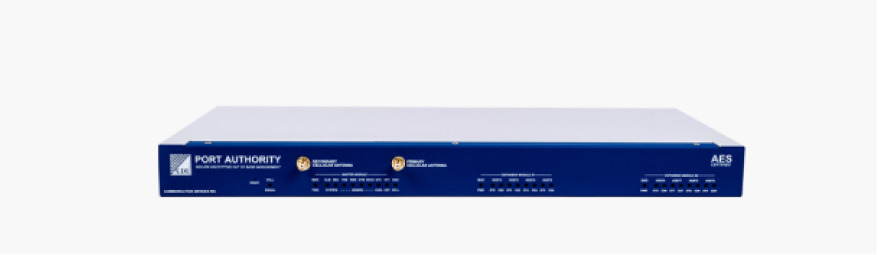
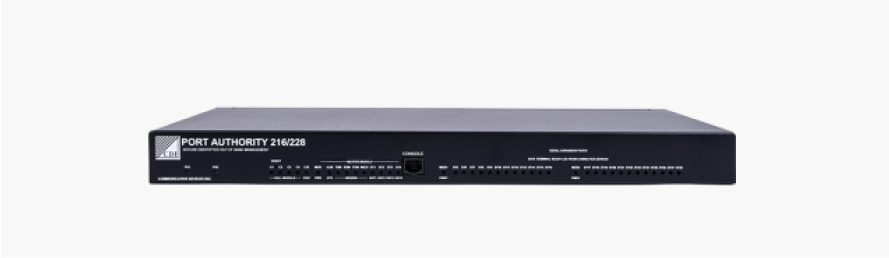
CDI’s Port Authority console server family was designed from the ground up for secure, validated Out-of-Band management in the most demanding environments in the country — federal agencies, defense contractors, energy infrastructure, transportation networks, and remote industrial sites. Here’s what that means for your compliance posture:
- First-party FIPS 140-3 Validated AES-256 encryption — on both LTE and Satellite IP transport paths
- Built-in hardware 2FA — access protection independent of AD, RADIUS, or TACACS+
- Private APN cellular connectivity — management traffic that never traverses the public internet
- Serial Power Control Modules (PCMs) — remote power cycling without a truck roll
- TAA Compliant | Built in the USA — supply chain integrity that clears federal procurement review
The Action Item Is Simple
If your Out-of-Band management solution is running on FIPS 140-2 validated cryptography — or on a vendor’s self-attested “compliance” claim — now is the time to evaluate your options. The September 22, 2026 deadline is 90 days out. Procurement timelines are not.
CDI is FIPS 140-3 validated today. Our solutions are on the shelf, TAA compliant, Made in USA, and ready to support your ATO process. We have been manufacturing secure OOB management hardware for over 50 years and we work with some of the largest and most security-conscious organizations in the country.
Don’t let a deadline drive your security architecture. Contact CDI at sales@commdevices.com or visit www.commdevices.com to learn how FIPS 140-3 Validated Out-of-Band Management fits your environment.
Related Tags
Share this article
Related Content


United States Office
- 85 Fulton Street Boonton, NJ 07005
- +1 973-334-1980
- +1 973-334-0545
- info@commdevices.com
© 2023 Communication Devices, Inc.