

Secure Out-of-Band Management for Grid Resilience

Adam Cady

90 Days Off the Grid: Why Nobody Is Counting on Luck Anymore
In the span of four weeks, two of the world's closest allies told their militaries and their citizens the same thing: plan to operate without the grid.
The Pentagon wants every major U.S. base able to run on its own for 90 days. The U.K. government is asking every household to be ready for at least three days without power, water, phone or internet. Neither announcement is about a specific threat. Both are about an uncomfortable truth: our power and water systems are vulnerable, and the people responsible for them are no longer relying on luck.
For anyone who runs critical infrastructure, the real question is not just whether the lights stay on. It is whether you can still reach, manage and recover the equipment that keeps them on when the primary network is gone.
The Pentagon: 90 days, no civilian grid
On September 30, 2026, Secretary of War Pete Hegseth announced FORTRESS America, short for Federal Operations for Resilience, Troop Resources, Energy, Supply and Survivability. Its core directive: every major military installation in the United States will generate its own power, independent of the civilian grid.
Internal Pentagon documents reported by Fox News Digital go further. Major bases in the continental U.S. would need to sustain essential operations for at least 90 days with no outside support, covering not just electricity but water, fuel and supplies. In early October, the Pentagon's acquisition chief stood up a dedicated FORTRESS America Program Office to execute it.
The reason is simple dependency. A 2021 Department of Commerce report found U.S. military bases draw 99% of their electricity from the commercial grid. Pentagon spokesman Sean Parnell put the stakes bluntly: "Power is combat now." Lose electricity, and you lose communications, water, logistics and command.
The proposed answers include microgrids, large-scale battery storage, solar, geothermal, natural gas and portable nuclear reactors. The 90-day standard is a planned requirement, not a claim that bases can meet it today. That gap is exactly where the work begins.
The U.K.: "Be Ready"
On October 22, 2026, the U.K. Cabinet Office launched "Be Ready," the first phase of a three-year national preparedness campaign. It asks households to prepare for at least three days of disruption to electricity, water, telephone networks and the internet, with food, bottled water and a plan for vulnerable family members.
The next day, Prime Minister Andy Burnham publicly urged Britons to prepare for emergencies, pointing to extreme weather, cyber risks and other threats. He said Britain had too often been on the back foot and needed to get ahead of disruptions instead. That same week, Storm Austen hit the south-west with 80 mph winds and left thousands of homes without power.
The U.K. is not alone. The European Commission has already told EU citizens to keep a 72-hour emergency kit, following Germany and the Nordic countries.
The common thread: you can't manage what you can't reach
Microgrids, battery banks, substations, pump stations and water treatment plants all have one thing in common. They are run by networked equipment: routers, firewalls, switches, SCADA gateways, servers and power distribution units.
When a cyberattack, storm or cascading outage takes down the primary network, that equipment is often still there and still powered. What disappears is the path engineers use to reach it. A misconfigured firewall, a hung router or a locked-up controller at a remote site becomes a truck roll, and in a regional emergency, a truck roll can take hours or days.
Self-sufficiency for 90 days, or even three, is not only a generation problem. It is a management problem. Any resilience plan that assumes the production network will be available to fix the production network has a single point of failure built in.
Where Secure Out-of-Band Management fits
Out-of-Band (OOB) Management gives engineers an alternate communications path that is not part of the network's own bandwidth. Through it they can reach the firewalls, routers, switches and servers at a site even when the primary network is down or compromised.
Communication Devices, Inc. (CDI) has built OOB solutions for more than 25 years, and our equipment is designed and built in the USA. Here is what that looks like in a resilience plan:
- An independent access path. CDI appliances use LTE cellular over a private APN, so the management path never touches the public internet and does not share fate with the production network.
- Direct serial console access. Engineers reach the device console itself, so they can recover gear that has lost its network configuration entirely.
- Remote power control. CDI Power Control Modules let engineers power-cycle hung equipment from anywhere, saving time, money and truck rolls when roads and crews are stretched.
- Security that is validated, not self-attested. CDI was the first organization awarded a FIPS 140-3 validation certificate (CMVP #5465). Built-in two-factor authentication protects every session.
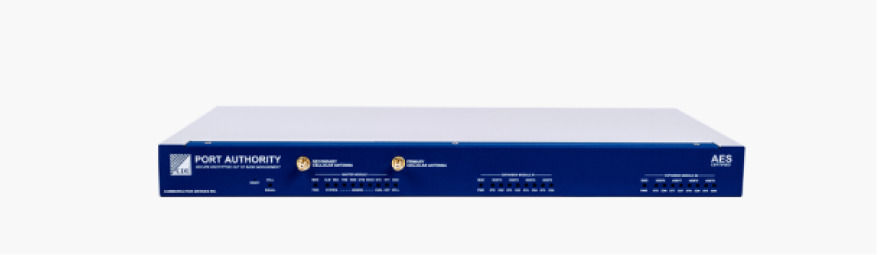
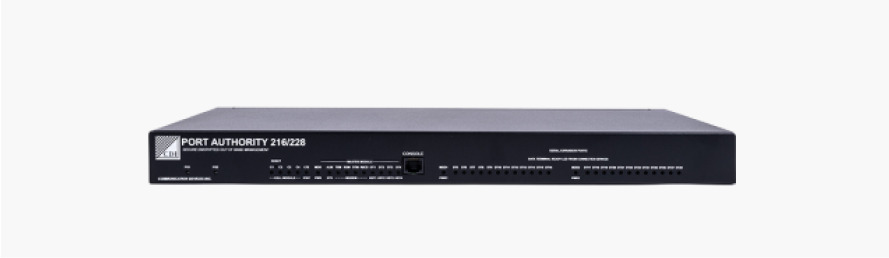
- A fit for every mission. The PA100 Series is built for U.S. federal networks and is FIPS 140-3 validated and FISMA-High approved. The PA200 Series brings the same security heritage to utilities, water systems and commercial operators.
An attacker or an outage that takes down your network should not also take away your ability to fix it. That is the whole point of an out-of-band path.
Five questions to ask before the next emergency
Whether you manage a military installation, a utility, a water system or a service provider network, start here:
- If the primary network went down right now, could you reach the console of every critical device?
- Does your management path ride the public internet, or a private network that attackers can't see?
- Can you power-cycle a hung device remotely, or does every lockup mean a truck roll?
- Is your OOB equipment FIPS 140-3 validated? FIPS 140-2 moved to Historical status on September 22, 2026.
- Where was your equipment made, and is it TAA compliant?
The Pentagon and the U.K. government have stopped counting on luck. Your network shouldn't either.
Talk to an expert. Call 1-800-359-8561 or schedule a demo to see how CDI keeps critical infrastructure reachable when it matters most.
#SmarterOutOfBand #OutOfBandManagement #FIPS1403Validated #ConsoleServer
Sources
- DefenseScoop: Pentagon memo outlines plan to operationalize FORTRESS America program office
- Fox News: Inside the Pentagon's plan to keep America fighting if global war erupts
- IBTimes UK: US military bases face reported 90-day self-sufficiency requirement
- Daily Wire: Why Hegseth is ordering every military base off the grid
- JFeed: Pentagon orders US bases to be ready for 90 days without outside support
- Beinsure: UK launches Be Ready campaign
- Informat.ro: Prime Minister Andy Burnham urges Britons to prepare
- ARY News: UK tells public to keep three days' emergency supplies
- Communication Devices, Inc.
Related Tags
Share this article
Related Content


United States Office
- 85 Fulton Street Boonton, NJ 07005
- +1 973-334-1980
- +1 973-334-0545
- info@commdevices.com
© 2023 Communication Devices, Inc.