

Managing Infrastructure Across Thousands of Network Sites

Adam Cady

Managing Infrastructure Across Thousands of Network Sites
Operational strategies for large-scale networks
Every network operator knows the math. One site is a project. A hundred sites is a program. Thousands of sites (cell sites, central offices, roadside cabinets, customer premises and edge locations spread across multiple states) is an operational discipline in its own right. At that scale, the question isn't whether something will fail today. It's whether your team can see it, reach it and fix it without putting someone in a truck.
The Visibility Paradox
Most network monitoring and management tools share a hidden dependency: they ride on the production network they're supposed to manage. When a router locks up, a firewall rule goes wrong or a firmware push bricks a switch, the management path fails at the exact moment you need it most. The device goes dark, the NOC loses visibility, and the default remedy becomes a dispatch.
For a telecom provider or managed service provider running thousands of sites, those dispatches add up fast. Each truck roll carries labor, mileage and downtime, and at remote or hard-to-reach locations a single outage can stretch from minutes into a full day. Multiply that across a large footprint and "we'll send someone" stops being a fallback and becomes a cost center.
Strategy 1: Build an Independent Path to Every Site
The foundation of large-scale operations is an access path that doesn't depend on the network being healthy. Out-of-Band (OOB) Management provides exactly that: a separate connection, typically LTE cellular, that reaches the serial console of firewalls, routers, switches and servers even when the primary network is down.
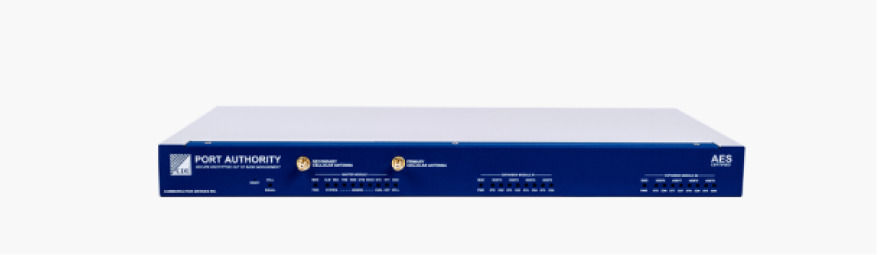
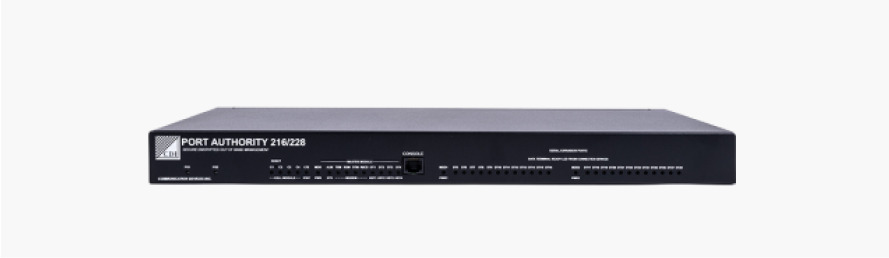
CDI has spent more than 25 years focused on Out-of-Band Management. Our appliances connect directly to device serial consoles, not through LOM, iDRAC or iLO interfaces, giving engineers the same command-line access they'd have standing in front of the rack. CDI equipment also supports flexible deployment (network and LTE modem, LEO or network only), so the same platform fits a carrier hub, a rural cabinet and a branch office.
Strategy 2: Fix It Remotely, Including the Power
Console access solves most problems. Some problems require a hard reboot. CDI's Power Control Modules (PCMs) let engineers remotely power cycle hung equipment over the same out-of-band connection. When the device that's locked up is the one you'd normally use to reach everything else, the ability to cycle its power from hundreds of miles away is the difference between a five-minute fix and a half-day drive.
Strategy 3: Centralize Management Without Mixing Customers
Visibility across thousands of sites requires a single place to manage them. For service providers, it also requires strict separation. CDI's OBM management software was designed with Managed Service Providers in mind. Multiple customer networks can be added to one system, each provisioned individually, with access granted per engineer to each customer network. Client devices can be shared across many networks or dedicated to a single customer, depending on contractual and security requirements.
That structure lets a NOC grow its team and its footprint at the same time, without handing every engineer the keys to every network.
Strategy 4: Secure the Back Door at Scale
An out-of-band path is an administrative path, and attackers know it. Infrastructure devices and their management interfaces are increasingly targeted, and a remote-access channel deployed at thousands of sites can become thousands of entry points if it isn't hardened.
CDI addresses this at the hardware level:
- First-party FIPS 140-3 validation. CDI was the first organization awarded a FIPS 140-3 validation certificate (#5465), and that validation covers our own equipment rather than a borrowed third-party module. With FIPS 140-2 certificates moved to Historical status as of September 2026, "validated" is no longer a nice-to-have.
- Private APN connectivity. CDI's LTE paths ride a private APN, so OOB devices aren't exposed to the public internet.
- Built-in two-factor authentication on every access session.
- Made in the USA and TAA compliant, with PA100 Series units approved for FISMA High installations and FirstNet Certified connectivity.
For commercial operators, the PA200 Series brings the same security heritage, including two-factor authentication and optional encryption for PCI compliance, at a price point built for large rollouts.
Strategy 5: Standardize Before You Scale
The operators who manage thousands of sites well share one habit: they standardize. One OOB platform, a consistent console and power-control design at every site, and one management system mean runbooks travel from site to site, training happens once, and new sites come online predictably. CDI's long-life hardware and consistent product families make that standardization practical across multi-year deployments, which is why leading carriers and MSPs have standardized on CDI for secure out-of-band management.
The Bottom Line
Managing infrastructure across thousands of sites isn't about watching more dashboards. It's about guaranteeing that when a site goes dark, your engineers still have a secure, independent way in, and the tools to fix the problem from where they sit.
That's what CDI builds. To see how secure Out-of-Band Management fits your network, schedule a demo or call 1-800-359-8561.
Related Tags
Share this article
Related Content


United States Office
- 85 Fulton Street Boonton, NJ 07005
- +1 973-334-1980
- +1 973-334-0545
- info@commdevices.com
© 2023 Communication Devices, Inc.