Validated vs. Compliant: What FIPS 140-3 Really Means for Out-of-Band
On September 22, 2026, NIST moved every remaining FIPS 140-2 certificate to its Historical list. From here on, FIPS 140-3 is the standard federal buyers and regulated industries will ask about.
That makes one question more important than ever for out-of-band management: when a vendor says "FIPS," whose certificate is it, and what does it actually cover? The answers vary more than most datasheets let on.
What FIPS 140-3 validation actually covers
FIPS 140-3 validation is issued by NIST's Cryptographic Module Validation Program (CMVP) after an accredited lab tests a specific cryptographic module. The certificate names the module, the vendor that holds it, the version tested and the operating environment it was tested in.
That precision matters. A certificate proves that one module, in one configuration, was tested. It doesn't automatically extend to every product that happens to contain some version of that code.
That's why the words on a datasheet matter:
- Validated means the vendor's module holds its own CMVP certificate, and you can look it up.
- Compliant, conformant or uses FIPS-validated crypto usually means the product relies on someone else's module, or on a claim the vendor made itself.
The open-source module shortcut
Many console servers and OOB appliances take a shortcut. They build on an open-source cryptographic library whose maintainers have validated a particular version of it, then point to that library's certificate.
Open-source cryptography isn't the problem. The gap is between the library and the product:
- The certificate belongs to the library, not the appliance. The console server itself was never submitted to a lab.
- Versions and environments must match. The library is validated only as built and run in the environments listed on its certificate. A vendor's firmware, patches and build choices can quietly move outside those limits.
- Accountability is split. When an auditor asks for proof, the vendor points to a third party that never tested the vendor's hardware.
For a device that holds the keys to your whole network's management plane, "it contains a validated library" is a much weaker claim than "it is validated."
Validated at the device: CMVP certificate #5465
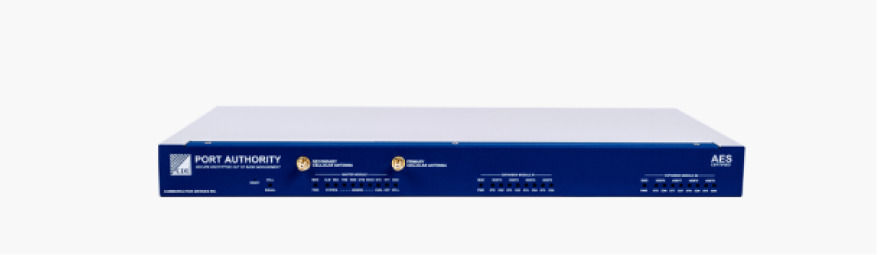
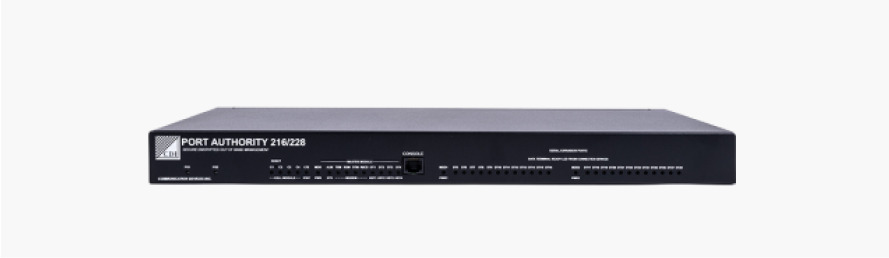
Communication Devices, Inc. took the harder route. CDI's PA100 secure out-of-band management product set holds its own FIPS 140-3 validation, CMVP certificate #5465. The certificate is in CDI's name, covers CDI's module and can be checked on NIST's website in under a minute.
CDI was the first secure out-of-band management vendor to pass FIPS 140-3 validation. Validation is built into a platform designed for the most demanding federal networks:
- FISMA High, approved for government installations that require the highest security baseline
- Private APN LTE connectivity, so the management path never touches the public internet
- Built-in two-factor authentication on every administrative session
- Serial console access and remote power control for recovering equipment without a site visit
- Made in the USA and TAA compliant
No other out-of-band management vendor offers device-level FIPS 140-3 validation paired with FISMA High.
Five questions to ask any OOB vendor
- What is your FIPS 140-3 certificate number, and whose name is on it?
- Does the certificate cover your appliance's module, or a third-party library inside it?
- Does the firmware I'm buying run the exact version and environment listed on the certificate?
- Is the product approved for FISMA High environments?
- Does the management path ever cross the public internet?
If a vendor can't answer the first question with a number, you already have your answer.
Validated beats compliant
The FIPS 140-2 sunset is a good time to audit every "FIPS" claim in your network. Your out-of-band path is the one you depend on when everything else has failed, so it should carry a certificate you can verify.
Learn more about CDI's FIPS 140-3 validated, FISMA High out-of-band management at commdevices.com.
#SmarterOutOfBand #FIPS1403Validated #OutOfBandManagement #ConsoleServer
Sources