

Lessons from Major Infrastructure Cyber Incidents

Adam Cady

Lessons from Major Infrastructure Cyber Incidents
When the Backup Fails With the Primary: What the FAA Outage Teaches Critical Network Operators
Critical infrastructure failures rarely begin with a dramatic cyberattack.
Sometimes they begin with a cut cable.
On September 21, 2026, a telecommunications failure disrupted air traffic across the U.S. Northeast after a primary communications line serving the FAA’s Philadelphia air traffic control facility failed and a backup fiber-optic line was also unavailable after being severed during railroad construction work. The result was immediate and visible: ground stops, cancellations, delays, and operational disruption across major airports including Newark, JFK, LaGuardia, Philadelphia, and Boston.
The incident was not reported as malicious. That is exactly why it matters.
If an accidental construction event can expose a critical infrastructure dependency, a determined adversary can look for the same weakness intentionally. For organizations that operate high-availability networks, federal systems, transportation infrastructure, telecom environments, utilities, hospitals, financial networks, or mission-critical enterprise infrastructure, the lesson is clear:
Redundancy is not the same as resilience.
What Happened: One Failure Became a Regional Disruption
According to public reporting, the outage began around 9:45 a.m. local time when a telecommunications line in New Jersey was cut, affecting FAA communications tied to the Philadelphia Terminal Radar Approach Control facility. The backup path was also impaired, leaving controllers without reliable communications and contributing to widespread air traffic disruption.
Incoming flights were halted or delayed at several major East Coast airports. Newark was especially hard hit, with operations significantly restricted for much of the day and hundreds of flights cancelled. Broader reports described thousands of flights delayed or cancelled nationwide as the disruption rippled through the aviation system.
Crews repaired the damaged lines later that day, and federal officials again pointed to the need to modernize aging air traffic control infrastructure.
But the most important lesson is not limited to aviation.
The FAA had redundancy. What failed was independence.
When primary and backup paths share physical corridors, carrier dependencies, construction exposure, power sources, routing facilities, or administrative systems, they may not be truly independent. They may simply be two versions of the same risk.
Redundancy on Paper Is Not Operational Resilience
Many critical networks are designed with backup circuits, alternate providers, redundant routers, secondary firewalls, and failover paths. On diagrams, the architecture appears resilient. In practice, shared fate can quietly undermine the design.
A backup path is only resilient if it does not fail for the same reason as the primary path.
That requires operators to ask harder questions:
Do the primary and backup circuits share the same conduit?
Do they cross the same bridge, rail line, manhole, carrier hotel, or right-of-way?
Are they dependent on the same carrier, contractor, pole line, power source, or central office?
Can the team reach the infrastructure if the production network is unavailable?
Is the management path truly separate from the network it is intended to recover?
The FAA incident is a real-world reminder that physical diversity, carrier diversity, media diversity, and management-plane independence are not technical luxuries. They are the difference between redundancy that looks good in planning and resilience that works under pressure.
Cyber Incidents Expose the Same Architectural Weakness
The same failure pattern appears in cyber incidents, except the trigger is intentional.
In February 2024, CISA and partner agencies warned that PRC state-sponsored actors known as Volt Typhoon had compromised and maintained access to U.S. critical infrastructure organizations across sectors including communications, energy, transportation, and water. The advisory described activity focused on positioning for disruption, including abuse of valid accounts and access to network administration systems.
That is the operational concern: adversaries do not only attack applications or endpoints. They target the systems operators depend on to manage, troubleshoot, and recover the network.
Public reporting in 2024 described intrusions into major U.S. telecommunications providers, raising concerns that carrier infrastructure and lawful-access systems could become part of the risk landscape organizations depend on for connectivity.
The July 2024 CrowdStrike outage offered another important lesson. It was not a cyberattack, but it disrupted millions of Windows systems globally and required direct remediation of affected machines. For many organizations, the challenge was not only detection. It was access, control, and recovery when normal systems were impaired.
Across these examples, the pattern is consistent: when infrastructure fails, the first operational question becomes, “Can we still reach what we need to fix?”
Lesson 1: Map Shared Fate Before It Maps You
The first step toward resilience is understanding where your supposedly independent paths converge.
Primary and backup circuits should be traced beyond the logical network diagram. Teams should understand the physical and operational dependencies behind each path, including carriers, conduits, rights-of-way, data centers, power feeds, cross-connects, contractors, and network operations dependencies.
This matters because “diverse carrier” does not always mean diverse route. Two carriers may lease capacity across the same physical corridor. Two circuits may enter a facility through the same meet-me room. Two paths may rely on the same power or routing facility. Two management tools may depend on the same identity provider or production VPN.
If one event can disable both paths, the organization does not have true redundancy. It has shared fate.
Critical infrastructure operators should regularly review path diversity, document convergence points, and validate that backup assumptions remain accurate as carriers, facilities, and network designs change.
Lesson 2: Separate Network Management From the Network Itself
A fiber cut cannot be fixed by a console server. A damaged physical circuit still requires physical repair.
But many incidents do not begin and end with a cut cable. They involve misconfigurations, routing failures, firewall lockouts, failed updates, device crashes, power cycling needs, compromised access tools, or the inability to reach equipment once the production network is degraded.
That is where secure Out-of-Band Management becomes essential.
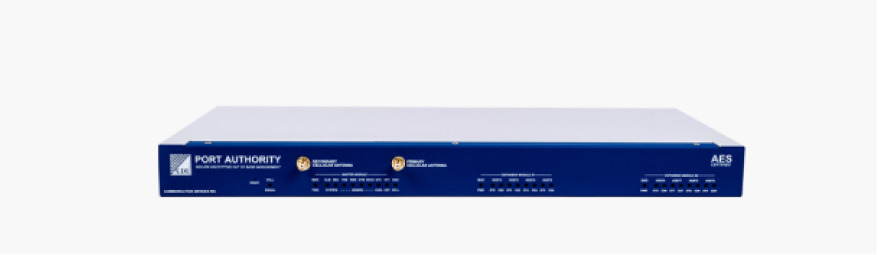
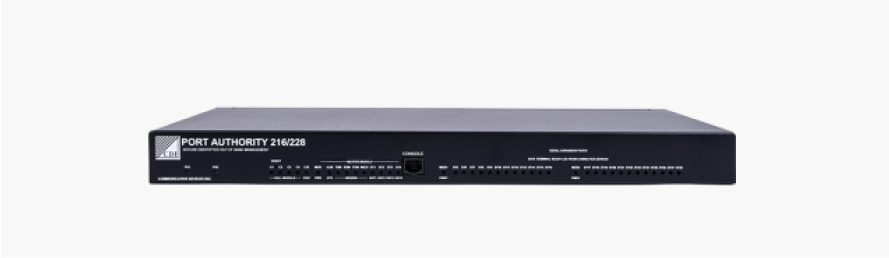
Out-of-Band Management gives authorized teams an independent management path to critical routers, switches, firewalls, servers, and other infrastructure devices. When the in-band production network is unavailable, an OOB path can preserve access to the serial console, management interface, or power control layer.
For remote sites, branch environments, data centers, telecom facilities, and federal or critical infrastructure networks, LTE-based OOB can add a different communications medium that does not rely on the same terrestrial circuit as the primary path.
This does not replace physical redundancy. It strengthens operational control.
With secure OOB, teams can diagnose failures, review device state, restore configurations, reroute traffic, power-cycle equipment, and coordinate recovery while the primary network remains impaired. Without it, recovery may require a truck roll, local hands, or waiting for the same failed network path to return.
In a crisis, time matters. But trusted access matters more.
Lesson 3: Make the Management Path as Secure as the Production Path
Out-of-Band access is powerful. That is why it must be protected.
An always-available management path cannot become an exposed back door. It should never be treated as a shortcut around security policy. It should be designed as a hardened administrative control plane with strong authentication, encryption, access control, logging, and separation from public internet exposure.
CISA’s Volt Typhoon advisory reinforces the importance of protecting administrative access, identity, and edge infrastructure because attackers actively seek the same pathways operators use to control systems.
For regulated and federal environments, cryptographic validation also matters. NIST’s Cryptographic Module Validation Program states that FIPS 140-3 validations are active for new and existing systems, while FIPS 140-2 active modules were accepted for new systems only through September 21, 2026, after which FIPS 140-2 certificates move to the Historical List.
That makes the distinction between “FIPS compliant” and “FIPS validated” especially important. A product that uses cryptography is not the same as a product with a validated cryptographic module under NIST’s CMVP. For organizations with federal, defense, infrastructure, or compliance obligations, proof matters.
CDI’s Out-of-Band Management solutions are built for this type of environment. Communication Devices, Inc. states that its PA100 secure OOB product set has been awarded FIPS 140-3 validation certificate #5465, and CDI positions its solutions around secure network access, OOB management, and U.S.-built infrastructure resilience.
Plan for the Day Both Paths Fail
The FAA outage was not a cyberattack. That is what makes it such a useful warning.
Critical infrastructure does not need a sophisticated adversary to fail. It only needs an overlooked dependency, an untested backup path, a shared physical route, a fragile management plane, or a recovery process that assumes the network will still be reachable.
In aviation, the cost was measured in delayed flights, cancellations, and disrupted travel. In a hospital, utility, financial network, telecom system, or federal environment, the consequences can be far more serious.
The organizations that ride out major infrastructure incidents will not simply be the ones with the most circuits. They will be the ones with paths that share the least.
True resilience requires independent access, validated security, operational visibility, and management control that survives the failure of the production network.
For critical network operators, the question is straightforward:
How independent is your backup path, really?
CDI helps organizations strengthen infrastructure resilience with FIPS 140-3 validated, LTE-based Out-of-Band Management and power control solutions designed for environments where uptime, control, encryption, and independent access are non-negotiable.
Sources
FAA halts flights to major US East Coast airports amid outage (Al Jazeera)
FAA Resolves Air Traffic Outage That Snarled Northeast Travel (Insurance Journal)
East Coast airport outage disrupts 7,000 US flights (AirHelp)
PRC State-Sponsored Actors Compromise and Maintain Persistent Access to U.S. Critical Infrastructure (CISA)
Related Tags
Share this article
Related Content


United States Office
- 85 Fulton Street Boonton, NJ 07005
- +1 973-334-1980
- +1 973-334-0545
- info@commdevices.com
© 2023 Communication Devices, Inc.