


Securing the Administrative Layer of Networks

Adam Cady

The overlooked cybersecurity battleground
Most security programs are built around protecting the data layer — endpoints, applications, databases. Far less attention goes to the layer that controls all of it: the administrative interfaces engineers use to configure, monitor, and recover the network itself. That's a problem, because attackers have figured out that compromising the administrative layer is often easier — and more valuable — than compromising the systems it manages.
Identity is the real battleground
According to Palo Alto Networks' 2026 Unit 42 Global Incident Response Report, nearly 90% of investigated breaches involved identity weaknesses as a material factor in the attacker's success. Credential misuse and brute-force attacks accounted for 21% of initial access pathways, and once inside, attackers increasingly weaponize the very tools administrators rely on: remote monitoring and management (RMM) platforms showed up in 39% of command-and-control techniques, letting intruders deploy malware and push configuration changes that blend seamlessly into routine administrative traffic.
That last point is what makes the administrative layer such a dangerous target. A compromise of an ordinary endpoint raises alarms. A compromise of the console server or management interface that engineers already use every day to make legitimate changes can go unnoticed for months — because from the network's perspective, it looks like business as usual.
Nation-state actors are already exploiting this
This isn't a hypothetical risk. In 2026, CISA and international partners issued a joint advisory attributing an active campaign to Russia's FSB Center 16, opportunistically exploiting vulnerable networking devices across communications, defense, energy, and government sectors. The advisory is notable less for its sophistication than for its simplicity: the actors succeeded largely through default credentials, exposed management interfaces, and poorly configured devices — exploiting known vulnerabilities, some over a decade old, that remained unpatched on internet-facing administrative portals.
CISA's guidance in response reads like a checklist of basic administrative hygiene most organizations still get wrong: eliminate default credentials, restrict who can reach management interfaces at all, enforce strong authentication, and stop treating router and console access as an afterthought. The advisory's core message is blunt — internet-facing administrative infrastructure needs the same monitoring and priority as any other critical system, because attackers are already treating it that way.
Why the administrative layer is structurally different
Administrative access is uniquely dangerous when compromised because it doesn't just expose data — it grants control. An attacker with access to a management interface can reconfigure firewalls, disable logging, reroute traffic, or lock legitimate administrators out entirely during an incident, which is precisely the moment an organization can least afford to lose visibility and control.
This is also why the design of the administrative access path matters as much as the credentials protecting it. If that path runs over the same production network it's meant to manage — or worse, sits exposed on the public internet — it inherits every risk of that network, plus the outsized blast radius of administrative privilege.
What a secure administrative layer looks like
A handful of architectural choices separate a resilient administrative layer from an exposed one:
Out-of-band by design, not by exception. Administrative access should run over a path that is physically and logically separate from the production network — ideally private cellular connectivity rather than a path reachable from the open internet — so a network outage or compromise doesn't also take down the ability to respond to it.
Direct console access over layered remote-management stacks. Every additional layer between an administrator and the device — a web-based LOM interface, a vendor cloud service — is another component that can be compromised. Direct serial console access reduces that attack surface.
Authentication that can't be an afterthought. Built-in two-factor authentication should be non-negotiable for any interface with administrative reach, not a bolt-on feature.
Cryptography that's validated, not assumed. First-party FIPS 140-3 validation means the protections on that administrative path have actually been tested against a federal standard — not merely described as "compliant."
The bottom line
The administrative layer isn't the back office of network security — it's the control room. As CISA's advisories and this year's incident response data both confirm, attackers already know that. The organizations that will fare best are the ones that stop treating administrative access as a convenience feature and start treating it as the high-value target it already is.
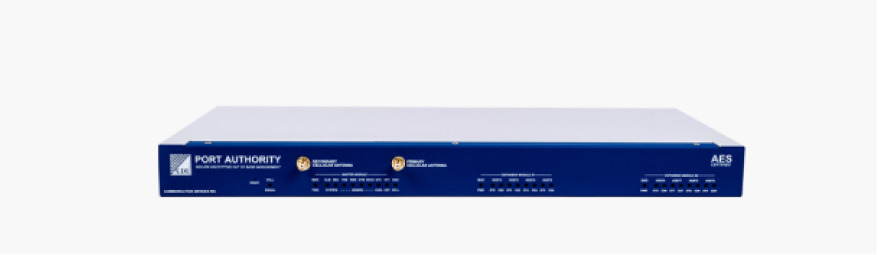
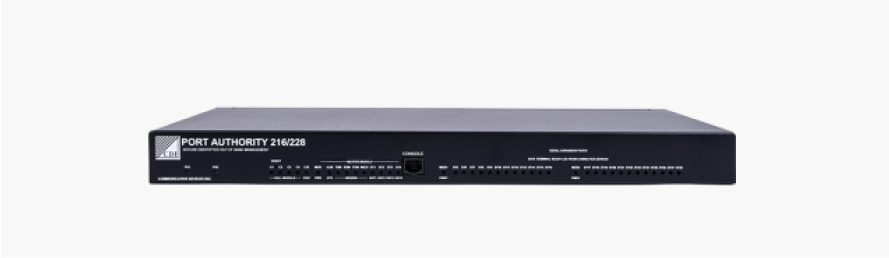
At Communication Devices, Inc., securing that administrative layer is the entire premise of our product line — first-party FIPS 140-3 validated, Made-in-USA out-of-band management built on private cellular connectivity with direct console access and built-in 2FA.
Related Tags
Share this article
Related Content


United States Office
- 85 Fulton Street Boonton, NJ 07005
- +1 973-334-1980
- +1 973-334-0545
- info@commdevices.com
© 2023 Communication Devices, Inc.