


Operational Control for Service Providers

Adam Cady

Operational Control for Service Providers
Delivering resilient infrastructure services to customers
It's 2:14 a.m. and a monitoring alert fires: a retail customer's regional hub has dropped off the network. Forty stores behind it can't process cards. The SLA promises restoration within four hours. The nearest field technician is ninety minutes away, and asleep.
What happens next depends on a decision the service provider made months earlier: whether it built an independent way to reach that site.
Scenario A: No out-of-band path. The NOC pings the hub. Nothing. The management platform rides the same circuit, so the device simply shows as unreachable. The customer has no remote hands on site, so a technician is dispatched. He arrives at 4:05 a.m., finds a router stuck after a failed overnight update, power cycles it and reloads the previous configuration. Service is restored at 4:40 a.m. The SLA is met by twenty minutes. The margin on that month's contract is gone.
Scenario B: CDI out-of-band in place. The NOC engineer opens the CDI management console and connects to the router's serial console over a private LTE path. The boot log shows the failed update. She power cycles the router through a CDI Power Control Module, interrupts the boot, loads the last known-good configuration and confirms traffic. Service is restored at 2:31 a.m. Nobody gets in a truck. The customer reads about it in the morning report.
Same failure. Same customer. Two very different outcomes, and two very different businesses.
Side-by-Side Comparison
Operational Requirement | In-Band Management Only | With CDI Out-of-Band Management |
Access during a production network outage | Remote access may be unavailable when it depends on the affected network. | A separately provisioned LTE connection provides an alternate path to supported device serial consoles. |
Recovery of hung or unresponsive equipment | An on-site visit may be required if remote access and power controls are unavailable. | A CDI Power Control Module enables remote power cycling of connected equipment. |
Engineer access across customer environments | Access controls depend on the management platform and each customer’s configuration. | CDI OBM software supports permissions by engineer and customer network, with shared or dedicated client devices. |
Management path exposure | Exposure depends on network architecture, routing, and security controls. | A properly configured private APN can keep the LTE management path off publicly routed internet connections. |
Administrative authentication | Authentication capabilities and enforcement vary by solution. | CDI offers two-factor authentication; deployment policies should enforce it for administrative access. |
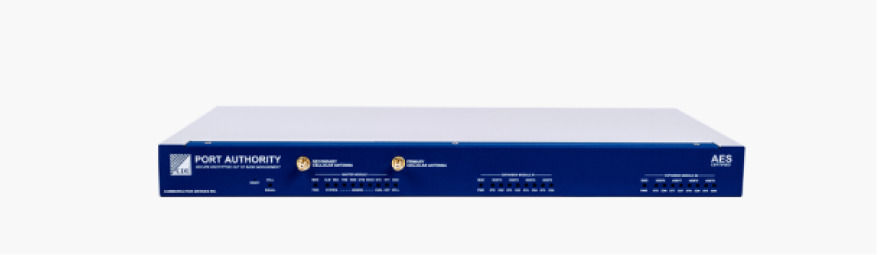
Evidence for cryptographic requirements | Validation depends on the selected products and their deployed configurations. | CDI’s Port Authority Series hardware cryptographic module holds FIPS 140-3 validation under CMVP certificate #5465, subject to its documented scope. |
Five Questions Your Customers Will Ask
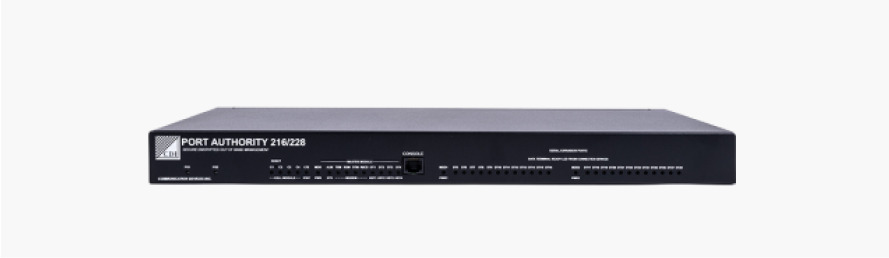
"How fast can you fix my network if it's down?" Fast, because you aren't depending on the network to fix the network. CDI appliances connect directly to device serial consoles over LTE, not through LOM, iDRAC or iLO, and deploy as network and modem, modem only, or network only to fit each site.
"Can your other customers' engineers see my infrastructure?" No. CDI's OBM management software was built with MSPs in mind. Each customer network is provisioned individually, and access is granted per engineer, per network. Customers with stricter requirements can have dedicated client devices instead of shared ones. All keystrokes are logged for forensic purposes.
"Isn't remote access a security risk?" It is when it's built on the public internet. CDI's out-of-band paths run over a private APN, every session requires two-factor authentication, and the PA200 Series offers optional encryption to support PCI compliance.
"Can you prove it meets our compliance requirements?" Yes, with paperwork. CDI was the first organization awarded FIPS 140-3 validation (Certificate #5465), and it covers CDI's own equipment rather than a borrowed module. With FIPS 140-2 certificates now Historical, that distinction shows up in federal and regulated procurement. PA100 Series units are approved for FISMA High, and CDI products are made in the USA and TAA compliant.
"Will this platform be around as long as our contract?" Yes. CDI designs long-life hardware in consistent product families, so the same runbooks, spares and training carry across your customer base for years.
From Cost Center to Revenue Line
Providers that answer those five questions well don't just keep customers; they upsell them. Guaranteed out-of-band recovery, documented validated security and per-engineer access controls make a natural premium service tier, and they shift renewal conversations from price to value.
CDI has built secure Out-of-Band Management for more than 25 years. To see how CDI fits your service delivery model, schedule a demo or call 1-800-359-8561.
Related Tags
Share this article
Related Content


United States Office
- 85 Fulton Street Boonton, NJ 07005
- +1 973-334-1980
- +1 973-334-0545
- info@commdevices.com
© 2023 Communication Devices, Inc.