

Shared Infrastructure. Isolated Management Access.

Adam Cady

Infrastructure Segmentation in Multi-Customer Environments
Nov 10, 2026 · @Adam Cady
Managed service providers, colocation operators, carriers, and shared-services IT teams all run the same basic model: many customers, one operations team, one management platform. That model is efficient. It also means a single management layer can reach into every customer's network at once.
Most providers segment customer data traffic carefully. Far fewer apply the same rigor to the management plane, the consoles, admin sessions, and power controls used to run the gear. Yet that is where the most privileged access lives. If customer A's environment can be used as a stepping stone into customer B's management access, the segmentation everywhere else does not matter.
Where segmentation breaks down
Shared platforms rarely fail because of one dramatic flaw. They fail through convenience that accumulates over time:
- Flat management networks. One management VLAN or jump host reaches every customer's devices. Compromise one session and the attacker can move laterally across tenants.
- Shared credentials. A single admin account, SNMP community, or local console password used across customers turns one leaked credential into a multi-customer breach.
- Overly broad roles. Technicians who need access to one customer's rack are given access to all of them, because scoping permissions is tedious.
- Internet-exposed management. Remote access paths that ride the public internet or shared broadband add attack surface that every tenant inherits.
- Weak attribution. When everyone logs in through the same path with the same account, nobody can prove who touched which customer's equipment, or when.
The result is a provider that is segmented on paper and flat in practice, exactly where it matters most.
A segmented management layer at a glance
Engineers authenticate once with 2FA, then reach only the customers their role allows, over a private path that never touches the internet or any tenant's network.
Architectural approaches that hold up
Strong multi-customer segmentation is layered. No single control is enough, but together they keep each customer's management access isolated, even when something else fails.
- Physical separation at the edge. Give each customer, or each customer's rack, its own Out-of-Band console server and serial connections. Physical boundaries are the hardest to misconfigure and the easiest to audit. For high-sensitivity tenants, dedicated hardware is the cleanest answer.
- Logical isolation where hardware is shared. When one appliance serves several tenants, map each serial port and power outlet to a single customer and enforce that mapping in the device, not just in a spreadsheet. No user scoped to customer A should be able to see, let alone open, customer B's ports.
- Independent, private transport. Carry management traffic over a path separate from customer data networks and from the internet. LTE over a private APN keeps console access off public networks and gives every site a recovery path that does not depend on any tenant's infrastructure.
- Identity and least privilege. Every technician gets a named account with built-in two-factor authentication. Roles are scoped per customer and per device, and access is granted for the job, not for convenience.
- Validated encryption on every session. Administrative sessions should be protected by cryptography that is FIPS 140-3 validated on the device itself. In a shared platform, the strength of the weakest link is every tenant's problem. CDI's equipment holds CMVP certificate #5465.
- Per-tenant power control. Serially controlled power modules let operators cycle a specific customer's device without touching anything else in the rack, and without dispatching on-site hands.
- Audit everything. Log every session, port, and power action with the user and the customer it belongs to. When a customer asks who accessed their equipment, the answer should take minutes, not a forensic project.
The principle is simple: a provider should be able to prove that each customer's management plane is reachable only by the people authorized for that customer, through ports and accounts no other customer can reach.
Who needs this
Any organization that manages infrastructure on behalf of more than one customer, business unit, or agency faces the same problem:
- Managed service providers running network operations for dozens of clients.
- Colocation and data center operators with many tenants in shared halls.
- Carriers and telecom providers managing customer-premises and edge equipment.
- Utilities and critical infrastructure separating operational technology from corporate IT, and one regulated system from another.
- Government and shared-services IT supporting multiple agencies or classification levels on common platforms.
For these operators, segmentation is no longer only a security control. It is part of the service they sell, and increasingly something customers and auditors ask them to demonstrate.
Segment the management plane, not just the data
Shared platforms will keep growing because the economics work. The providers that earn long-term trust will be the ones that can show each customer, in detail, that their management access is isolated, encrypted, and accountable.
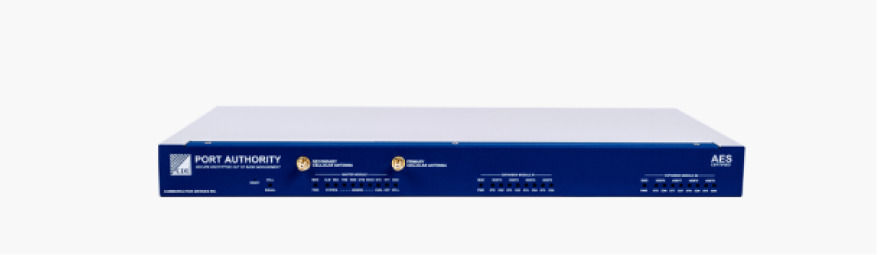
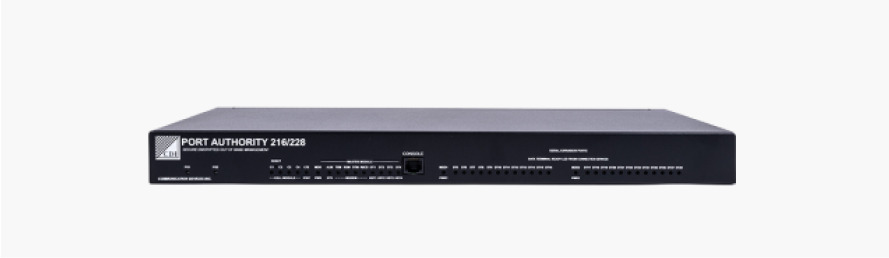
Communication Devices, Inc. builds U.S.-made, FIPS 140-3 validated Out-of-Band Management and power control solutions designed for exactly this: direct serial console access over private-APN LTE, built-in two-factor authentication, and per-outlet remote power control, independent of every customer network you support.
To design a segmented management layer for your multi-customer environment call 973.334.1980.
Related Tags
Share this article
Related Content


United States Office
- 85 Fulton Street Boonton, NJ 07005
- +1 973-334-1980
- +1 973-334-0545
- info@commdevices.com
© 2023 Communication Devices, Inc.