

When Automation Fails: The Human Control Plane

Adam Cady

The Human Control Plane: Infrastructure Security in Autonomous Networks
Autonomous networks are no longer a roadmap slide. Intent-based networking, AIOps platforms, and closed-loop automation now push configuration changes, reroute traffic, and remediate faults faster than any engineer could type a command.
That speed is the point. It is also the risk.
When software makes decisions at machine speed, the question every operator has to answer is simple: when the automation is wrong, compromised, or offline, how does a human take back control? The answer is not a better algorithm. It is a separate, secure control layer that the automation cannot touch and the production network cannot take down. In the data center, that layer already has a name: Out-of-Band Management.
Autonomy raises the stakes
Automation does not remove failure modes. It concentrates them and accelerates them. Three risks stand out:
Machine-speed mistakes. A bad policy or a flawed model output can push the same wrong change to hundreds of devices in seconds. A human typo breaks one switch; an automated one can break a region.
Self-inflicted lockout. When the automation pushes a change that severs the management VLAN, kills a routing adjacency, or misapplies an ACL, it also cuts off the very path it would use to roll back. The orchestrator can no longer reach the devices it just broke.
A single, attractive target. An orchestration platform with write access to every device is the most valuable credential in the building. If an attacker compromises the controller, its APIs, or its service accounts, they inherit the network's own automation as their tool.
In each case, the in-band network is either the problem or unavailable. Recovery depends on an independent path back to the equipment, and on a person authorized to use it.
The Smart Hands lesson
Data centers solved a version of this problem long ago. When a router hangs at 2 a.m. in a colocation facility three states away, operators have two choices: open a ticket for on-site Smart Hands, or connect directly to the device's console over an Out-of-Band path.
The industry overwhelmingly chose Out-of-Band, and not just for speed. Smart Hands technicians are capable, but they are not your engineers. They do not know your topology, your change history, or your security posture. Every remote-hands ticket means:
Delegating physical access to someone outside your organization, often working from verbal instructions.
Slower recovery, measured in dispatch time rather than seconds.
Weaker accountability, because the person touching the equipment is not the person accountable for it.
Out-of-Band keeps the authority with the right people. Your own engineer, authenticated and logged, reaches the serial console directly, sees exactly what the device sees, and makes the call.
Autonomous networks raise the same question in a new form. Handing the network to an AI agent with no independent override is the Smart Hands problem at scale: you have delegated control to something that is not accountable to you, and you have no direct path to intervene when it gets things wrong.
What a secure control layer requires
A human override is only useful if it works when everything else has failed, and only safe if an attacker cannot use it. That sets five requirements.
True independence from production. The control path cannot share the network, the internet circuit, or the credentials it is meant to back up. A private cellular path, such as LTE over a private APN, keeps management traffic off the public internet entirely and survives a total in-band outage.
Direct console access, not another software layer. Serial console access reaches the device below the operating system's network stack. It works when the management plane is down, when the device is mid-boot, and when the configuration is broken.
Validated cryptography. The override path protects the most privileged access in the environment. Its encryption should be FIPS 140-3 validated on the device itself, not merely "compliant" or dependent on a third-party module. CDI's equipment holds CMVP certificate #5465.
Strong identity at the door. Built-in two-factor authentication ensures that only named, authorized people can use the path, and that every session is attributable to a person.
Physical recovery without a truck roll. When a device needs a hard reset, serially controlled power modules let an engineer power-cycle it remotely, completing the job Smart Hands would otherwise be dispatched to do.
Together, these make the Out-of-Band path a control plane of last resort: separate, hardened, and answerable to people.
Automation and Out-of-Band work together
None of this is an argument against automation. Out-of-Band platforms can and should integrate with APIs, orchestration tools, and monitoring systems. Automated health checks over the Out-of-Band path, scripted recovery runbooks, and alerting into existing workflows all shorten recovery time.
The distinction is about who holds final authority. A sound design draws the line clearly:
Automation handles the routine: provisioning, monitoring, compliance checks, and known-good rollbacks.
Humans hold the override: when automation fails, behaves unexpectedly, or may itself be compromised, an authenticated engineer takes control through a path the automation does not own.
That is the same checks-and-balances principle behind two-person rules, change approval boards, and separation of duties. Autonomy without an independent override is not resilience. It is a single point of failure with good marketing.
As AI-driven operations mature, the Out-of-Band layer may take on more automated roles. For now, and for any environment where availability and security are non-negotiable, the human element remains the control.
Keep the keys in human hands
The data center learned that recovery should not depend on someone else's hands on your equipment. Autonomous networks are about to relearn the same lesson. Before handing more of the network to AI-driven systems, ask one question: if this automation fails or turns against us, how does our team get back in?
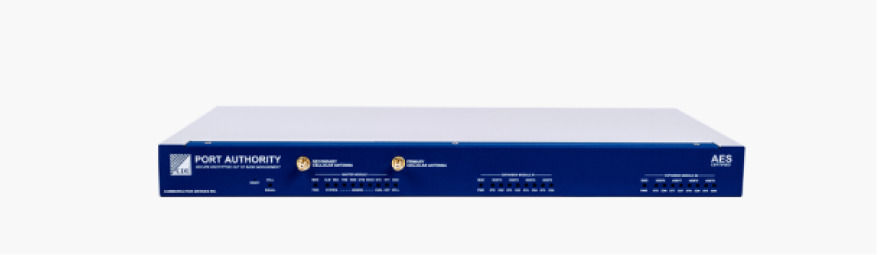
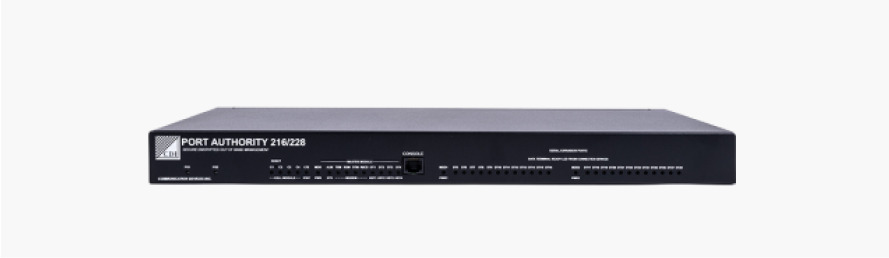
Communication Devices, Inc. builds U.S.-made, FIPS 140-3 validated Out-of-Band Management solutions that answer that question: direct serial console access over private-APN LTE, built-in two-factor authentication, and remote power control, all independent of the production network.
To talk through a secure control layer for your environment, call 973.334.1980.
Related Tags
Share this article
Related Content


United States Office
- 85 Fulton Street Boonton, NJ 07005
- +1 973-334-1980
- +1 973-334-0545
- info@commdevices.com
© 2023 Communication Devices, Inc.