

The Future Role of Infrastructure Control Systems

Adam Cady

The Future Role of Infrastructure Control Systems
Infrastructure used to live in a few large buildings. Today it lives everywhere: in hyperscale and colocation data centers, at the network edge, in substations and pump stations, along rail lines, at cell sites, and in thousands of small cabinets no engineer will ever visit in person.
As infrastructure spreads out, the ability to see and control it becomes the limiting factor. The organizations that run reliable networks over the next decade will not be the ones with the most equipment. They will be the ones that can reach, see, and recover every device they own, under any conditions, securely. That is the job of the infrastructure control layer, and its role is about to grow.
Five forces raising the stakes
1. Distribution. Edge computing, AI inference sites, distributed energy resources, and grid modernization are pushing equipment into more locations, each with fewer people nearby. Every new site is a place where an outage can strand you without access.
2. Automation and AI. Networks increasingly configure and repair themselves. That speeds routine work but also means mistakes propagate at machine speed. When automation fails or locks itself out, operators need an independent way back in.
3. Convergence of IT and OT. Utilities, transportation, and industrial operators are connecting operational technology to enterprise networks. Serial-connected and legacy devices that once sat on isolated networks now need secure remote management that meets critical-infrastructure expectations.
4. A sharper threat environment. Government advisories have warned that state-sponsored actors target exposed remote-access paths, small-office routers, and IoT gateways to gain footholds in critical networks. Management access is now a primary target, not an afterthought.
5. Higher regulatory bars. Cryptographic standards are moving forward. With FIPS 140-2 now in historical status since September 2026, federal and regulated buyers expect FIPS 140-3 validated equipment, along with strong authentication and complete audit trails for administrative access.
Each force on its own increases the importance of visibility and control. Together, they make it a core design requirement rather than an operational convenience.
What the next-generation control layer looks like
The console server of the past was a utility closet tool. The infrastructure control system of the next decade is a strategic layer with clear characteristics:
Connectivity
Yesterday: Dial-up modem or shared broadband.
Tomorrow: Private cellular path, independent of production and the internet.
Reach
Yesterday: Data center racks.
Tomorrow: Every site, from the data center to the remote cabinet.
Security
Yesterday: Passwords and “compliant” crypto.
Tomorrow: FIPS 140-3 validated crypto, built-in 2FA, full session logging.
Recovery
Yesterday: Console access only.
Tomorrow: Console access plus remote power control.
Integration
Yesterday: Standalone tool.
Tomorrow: API-connected to monitoring and automation, with human override.
Role
Yesterday: Last resort for emergencies.
Tomorrow: Always-on visibility and a trusted path for every change.
The common thread is independence. The control layer must keep working when the production network, the internet circuit, or the automation platform does not. Visibility that disappears during an outage is not visibility at all.
What operators should do now
- Map your blind spots. List every site where an outage today would require a truck roll to diagnose. That list is your control-layer gap.
- Separate the control path from production. Audit whether remote management depends on the same network, internet circuit, or credentials it is meant to back up. If it does, it will fail when you need it.
- Raise the security bar on management access. Require validated cryptography, multi-factor authentication, and named-user logging for every administrative path, including legacy serial access.
- Plan for power, not just console. Many remote recoveries end with a hard reset. Remote power control turns those from dispatches into keystrokes.
- Connect the control layer to automation, but keep a human override. Let monitoring and orchestration use Out-of-Band paths for health checks and recovery runbooks, while authenticated engineers retain final authority.
- Measure it. Track mean time to recovery, truck rolls, and sites reachable during outages. These numbers show the value of the control layer and where to extend it next.
Visibility is becoming infrastructure
As networks grow more distributed, automated, and targeted, operational visibility stops being a feature of the network and becomes infrastructure in its own right: designed, secured, and funded like the systems it protects.
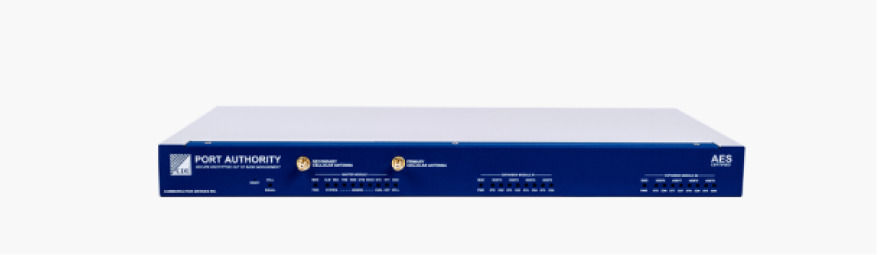
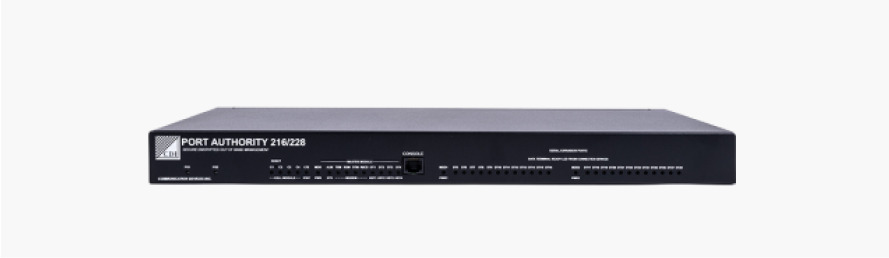
Communication Devices, Inc. builds U.S.-made, FIPS 140-3 validated (CMVP certificate #5465), LTE-based Secure Out-of-Band Management and power control solutions for that future. CDI delivers direct serial console access over private-APN cellular, built-in two-factor authentication, and remote power control, all independent of the production network.
To plan your infrastructure control layer, call 973.334.1980.
Related Tags
Share this article
Related Content


United States Office
- 85 Fulton Street Boonton, NJ 07005
- +1 973-334-1980
- +1 973-334-0545
- info@commdevices.com
© 2023 Communication Devices, Inc.