


Multi-Tenant Security Made Simple: Managing Many Networks, One Secure Control Plane

Adam Cady

Why MSPs Are Turning to CDI's Out-of-Band Manager Platform
If you're a service provider or MSP, you're not managing a network — you're managing dozens, sometimes hundreds.
Each customer environment comes with its own security posture, SLA commitments, compliance mandates, and operational constraints. When something fails at the edge, accountability falls on you.
That operational reality is precisely why Communication Devices, Inc. (CDI) engineered the Out-of-Band Manager (OBM) platform — not as simple management software, but as a hardened, multi-tenant control plane purpose-built for secure, distributed infrastructure at scale.
Today, some of the largest federal networks, leading telecommunications providers, and major defense contractors rely on CDI technology to maintain secure visibility and control across geographically dispersed assets. The same architecture protecting mission-critical government and carrier environments is available to MSPs delivering managed out-of-band services.
OBM is available for both on-premises deployment and cloud-based implementation, enabling service providers to align with customer security requirements, regulatory mandates, and operational preferences.
Secure Multi-Tenant Architecture Built for MSP Environments
True multi-tenancy is not simply a user interface feature — it is an architectural requirement.
CDI's OBM platform delivers:
- True multi-tenant segmentation
- Complete logical isolation between customer environments
- Granular policy enforcement per tenant
- Centralized management without cross-customer visibility
Each tenant operates within its own secured environment while the provider retains global operational oversight.
No data bleed. No access overlap. No compromise of customer boundaries.
This isolation model is derived from architectures deployed in high-assurance federal and carrier environments where segmentation failures are unacceptable.
Role-Based Access Control (RBAC): Operational Precision at Scale
As your customer base grows, access control complexity grows with it.
OBM incorporates robust role-based access control (RBAC) that enables providers to:
- Define technician, administrator, auditor, or read-only roles
- Assign permissions per device, site, or tenant
- Enforce least-privilege principles
- Maintain strict operational boundaries across teams
The platform scales without introducing risk, allowing MSPs to expand service portfolios without expanding exposure.
Continuous Polling and Site Monitoring
Visibility is the foundation of service reliability.
OBM continuously polls remote sites to provide:
- Real-time status visibility
- Device health monitoring
- Proactive outage awareness
- Rapid response to service-impacting events
For MSPs, this translates into reduced mean time to repair (MTTR), stronger SLA adherence, and fewer reactive escalations. Instead of discovering failures after customer calls, providers gain early operational insight.
Automated Configuration Management Across Distributed Infrastructure
Configuration drift is one of the most common sources of instability and compliance risk in multi-site deployments.
OBM enables:
- Automated configuration pushes
- Consistent policy enforcement
- Version control across distributed assets
- Reduced risk of misconfiguration
Whether deployed on-premises or in a cloud-hosted model, OBM enforces configuration consistency across tenants, regions, and infrastructure tiers.
Full Audit Visibility and Keystroke Logging
In regulated and security-sensitive environments, auditability is not optional.
OBM includes:
- Comprehensive keystroke logging
- Full session auditing
- Detailed activity tracking
- Technician-level accountability
When customers or compliance teams ask, "Who accessed what, and when?" the answer is precise, documented, and defensible.
Built to Complement CDI's Secure Out-of-Band Infrastructure
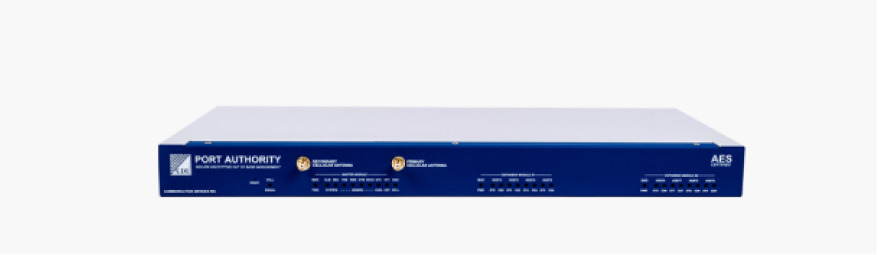
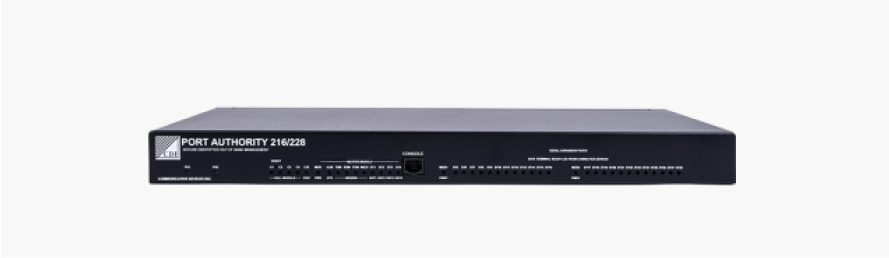
OBM is designed to operate seamlessly with CDI's U.S.-engineered secure out-of-band hardware platform, featuring:
- FIPS 140-3 validated encryption
- Private static IP connectivity
- Integrated remote power control
- Physically isolated management paths
Together, CDI's hardware and OBM software create a secure, resilient, and centrally orchestrated management architecture that transforms out-of-band access into a scalable managed service capability.
The Bottom Line
Out-of-band management is no longer just a contingency path for worst-case scenarios.
For MSPs and service providers, it has become a foundational service layer — enabling secure remote access, operational consistency, compliance enforcement, and multi-tenant scalability.
CDI's OBM platform delivers granular control, strict tenant isolation, full audit accountability, automated operational efficiency, and deployment flexibility.
If you manage many networks, OBM gives you one secure platform to control them all.
Related Tags
Share this article
Related Content


United States Office
- 85 Fulton Street Boonton, NJ 07005
- +1 973-334-1980
- +1 973-334-0545
- info@commdevices.com
© 2023 Communication Devices, Inc.